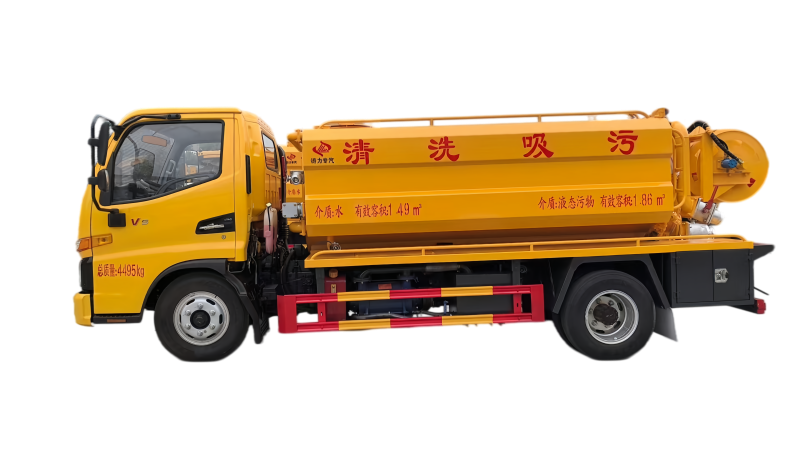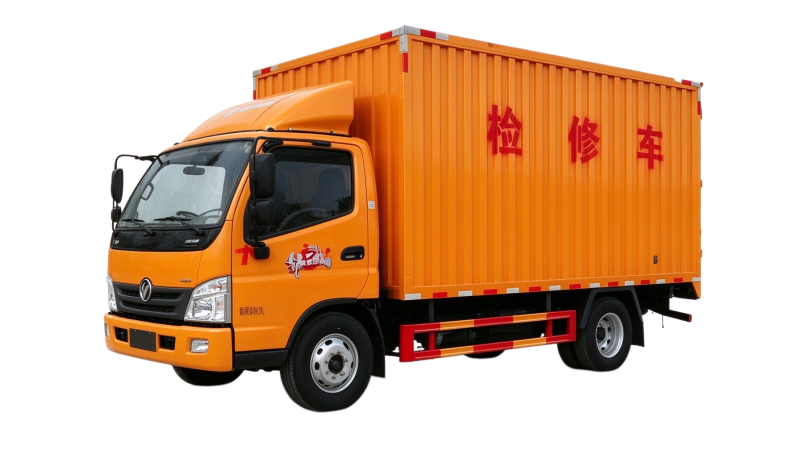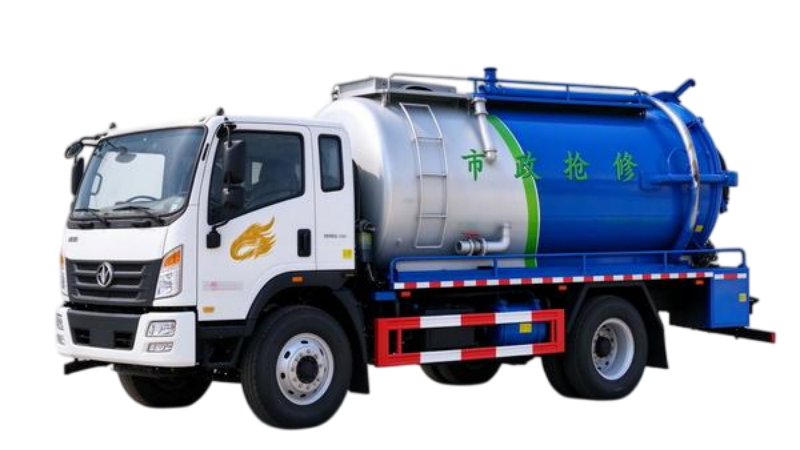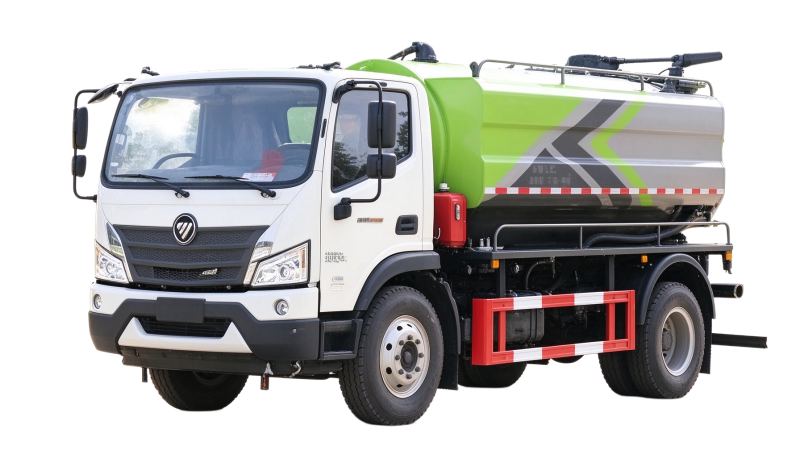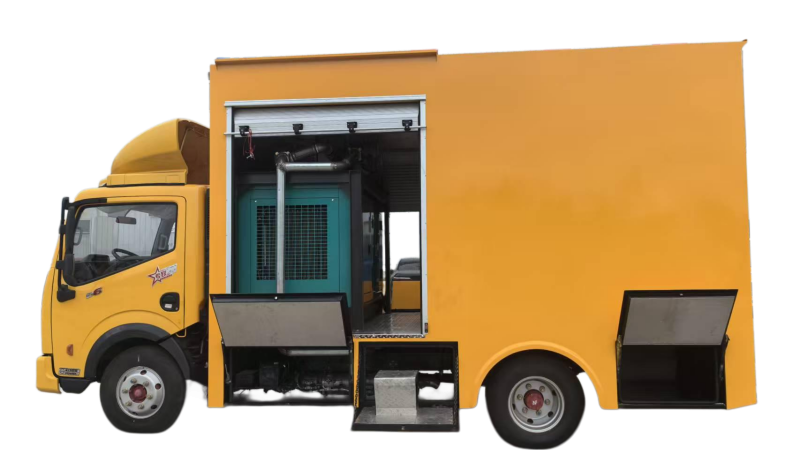
Every powerful emergency rescue vehicle and every sophisticated municipal sanitation vehicle starts as cold steel plates. Inside the workshop of Hubei Zhuli, these steel plates undergo a remarkable transformation. Through dozens of processes including blanking, forming, welding, coating and final assembly, they are built into special vehicles that serve on emergency rescue fronts and support urban operations.
This article takes you into the production workshop of Hubei Zhuli. Following the core production flow from cutting to coating, we reveal the complete manufacturing process of a high-quality special vehicle. This is not only a technical interpretation of manufacturing processes, but also an up-close look at the manufacturing capability of the special vehicle industry in Suizhou.
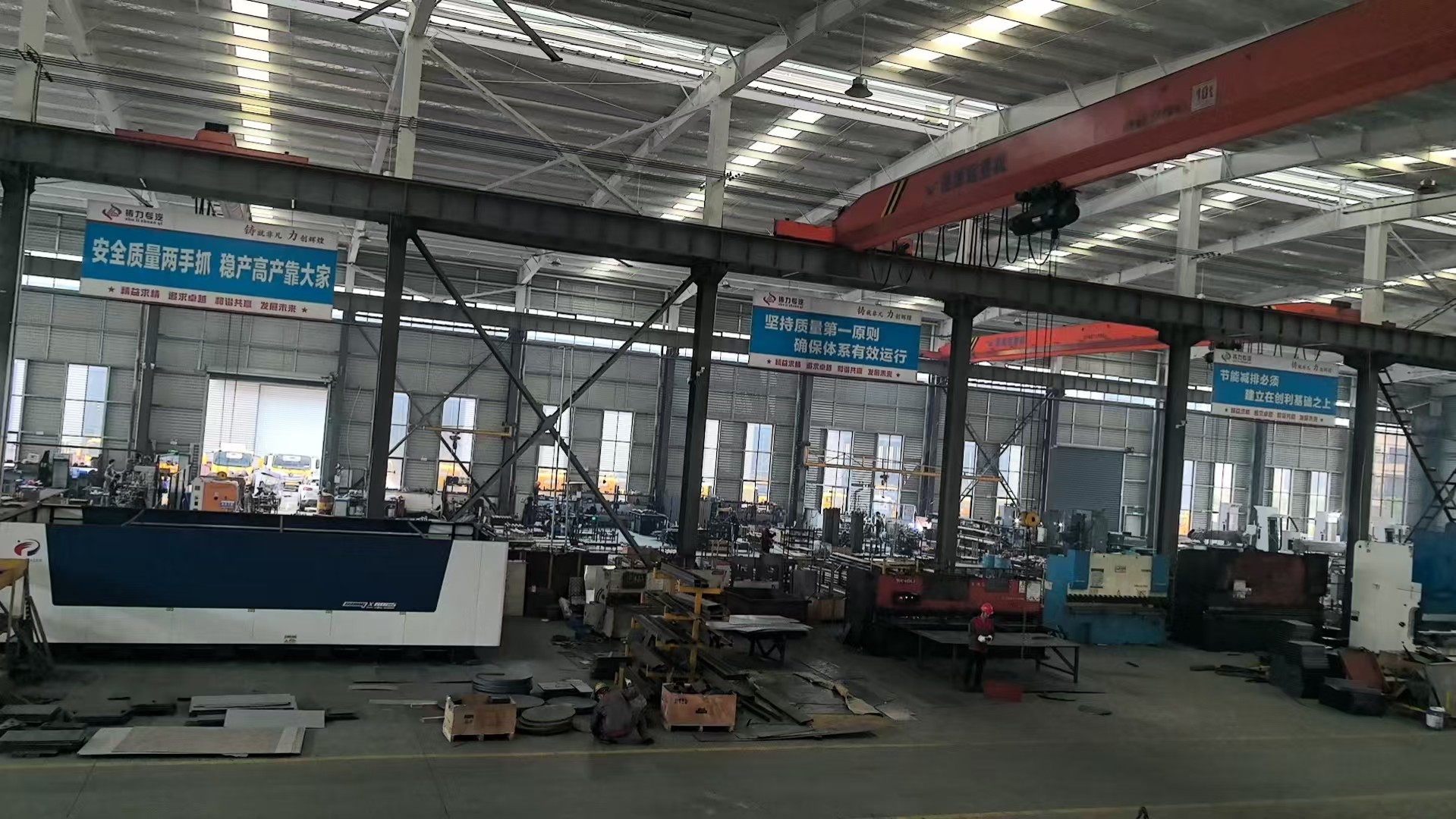
Blanking and forming workshop marks the start of special vehicle manufacturing, and the first checkpoint that determines product precision and quality.
Upon entering the blanking workshop of Hubei Zhuli, you will first see fiber laser cutting machines. The equipment can rapidly cut carbon steel and stainless steel plates with smooth cuts, reducing follow-up grinding work. Compared with traditional flame cutting, laser cutting creates a smaller heat-affected zone and minimal plate deformation, laying a solid foundation for subsequent welding and assembly.
Next to the laser cutters are CNC shearing machines and CNC bending machines. Shearing machines perform straight cutting of steel plates with a maximum cutting thickness of 12 mm. Bending machines bend cut plates into required angles and shapes according to drawings. Controlled by CNC systems, operators input drawing parameters, and the machines automatically position and process materials. The plate machining precision stays within the conventional industry range of ±0.3~0.5 mm.
For parts requiring punching and profiling, the workshop is equipped with CNC punching machines and hydraulic presses. Punching machines make various holes and notches on steel plates, while hydraulic presses form plates into 3D structures via moulds. Supported by a quick mould change system, mould replacement only takes several minutes, enabling fast switching for multi-variety and small-batch orders.
Hubei Zhuli applies digital management in the blanking and forming stage. Key assemblies such as subframes and tanks are assigned unique QR codes, recording part number, material, production batch and other information. The QR codes travel with components through all working procedures, realizing full-process quality traceability for critical structural parts.
Components after blanking and forming are transferred to the welding workshop. Welding quality directly determines structural strength and service life, making it a core procedure in special vehicle manufacturing.
The welding workshop of Hubei Zhuli is equipped with automatic welding workstations fitted with 6-axis articulated robots and arc welding systems. Robotic welding delivers stable performance and consistent welds. It can precisely control parameters including current, voltage, welding speed and wire feed rate to ensure qualified welds.
For large structural parts such as subframes and tanks, welding positioners work together with robots. The positioner rotates workpieces to the optimal welding angle, allowing robots to weld in the best posture. This practice improves welding quality and reduces the physical workload of welders.
Automated robots cannot cover all working scenarios. Manually operated welding by certified skilled welders is adopted for small-batch non-standard parts and welds in confined spaces. Welding technicians of Hubei Zhuli hold welding certificates and are proficient in shielded metal arc welding, CO₂ gas shielded welding, TIG welding and other processes. Manual welding serves as an effective complement to automated production.
Weld inspection is carried out after welding. The workshop adopts visual inspection combined with sampling non-destructive testing. Pressure tanks shall undergo ultrasonic testing as required by specifications, while atmospheric tanks adopt penetrant testing. Any unqualified welds will be repaired and re-inspected until meeting technical standards.
Welded steel structural components for upper bodies are sent to the coating workshop. Coating provides both aesthetic finish and long-term anti-corrosion protection. Special vehicles operate outdoors all year round, and some are exposed to corrosive media. Coating quality directly affects the service life of vehicles.
Hubei Zhuli’s coating workshop adopts mature coating technology for upper body components. The full process includes pretreatment, primer spraying, putty application, intermediate coating, topcoat spraying and drying.
Pretreatment is the foundation of coating quality. Steel workpieces are first treated by shot blasting or sand blasting to remove mill scale, rust and oil contamination. Meanwhile, proper roughness is formed on workpiece surfaces to enhance coating adhesion, achieving a surface cleanliness of Sa2.5 grade or above.
Primer undertakes core anti-corrosion functions. The workshop uses epoxy zinc-rich primer with high zinc content for excellent cathodic protection. Primer spraying is completed in enclosed spray booths equipped with forced ventilation and paint mist collection systems.
Putty application and intermediate coating fill tiny surface defects of workpieces and improve the fullness and flatness of topcoat, which requires great craftsmanship and patience from operators.
Topcoat determines the final appearance of vehicles. Hubei Zhuli applies two-component polyurethane topcoat featuring rich color and good weather resistance. Spraying is conducted in constant temperature and humidity topcoat booths to minimize the impact of ambient temperature and humidity on paint quality. Red topcoat and reflective markings required for emergency rescue vehicles are applied during the coating stage.
After spraying, workpieces are moved to the drying area, adopting natural air drying assisted by low-temperature hot air drying. After drying, indicators including paint film hardness, adhesion and gloss are sampled and tested to confirm compliance with quality standards.
Hubei Zhuli attaches great importance to environmental compliance in coating operations. Coating waste gas is collected centrally and purified through dry filtration + activated carbon adsorption systems. VOC emission concentrations meet national environmental standards, practicing green manufacturing and fulfilling corporate environmental responsibilities.
Coated upper body structures, together with purchased chassis and various supporting parts, are transported to the final assembly workshop. Here, thousands of components are assembled into a complete special vehicle.
Final assembly starts with chassis modification. Commercial chassis are adaptively adjusted according to upper body design requirements, including beam reinforcement, subframe installation, power take-off fitting and pipeline reservation, all performed at dedicated chassis modification stations.
Subframe installation follows. The subframe acts as the load-bearing connection structure between chassis and upper body, fastened to the chassis main beam via U-bolts or connection plates. Subframe assembly precision affects the vehicle’s center of gravity and driving stability. Operators use torque wrenches to fasten every bolt strictly in accordance with specified torque values.
The next step is upper body mounting, one of the most recognizable procedures in final assembly. An overhead crane lifts tanks or box bodies weighing several tons steadily and positions them precisely above the subframe. Multiple workers coordinate alignment during mounting to ensure accurate positioning and firm connection.
Piping and electrical systems are installed afterwards. Hydraulic pipelines, air brake pipelines and vehicle wiring harnesses are routed inside the vehicle body following drawings. Hubei Zhuli adopts modular prefabrication of pipelines and wiring harnesses to boost assembly efficiency and circuit reliability. All pipelines undergo pressure testing, and all electrical circuits are powered on for inspection.
The final step is installation and commissioning of on-board equipment. Professional technicians assemble and debug core rescue equipment equipped on emergency rescue vehicles, including generator sets, lighting systems, demolition tools and life detection devices, to guarantee stable performance of rescue equipment.
After the completion of vehicle assembly, a full set of quality inspections must be passed before factory release.
Visual inspection is the first test item, checking paint condition, integrity of markings and assembly gaps. Special tooling and precision measuring equipment are used to inspect key dimensions and verify compliance with drawing requirements. Functional tests perform practical verification of all vehicle functions, including hydraulic lifting, water pump operation and lighting control.
Road tests verify vehicle driving performance. Every vehicle completes acceleration, braking, steering and climbing tests on the factory test track to check driving stability and handling performance. Emergency rescue vehicles additionally undergo special functional demonstration tests for on-board equipment.
Only vehicles passing all inspection items will be issued a factory certificate by Hubei Zhuli and delivered to customers.
From steel plate cutting to finished vehicle roll-off, from cold metal to emergency rescue equipment, the production line of Hubei Zhuli embodies the craftsmanship of special vehicle manufacturing. This rigorous and complete production control process is the solid guarantee for product quality of Hubei Zhuli.

 Chinese
 English