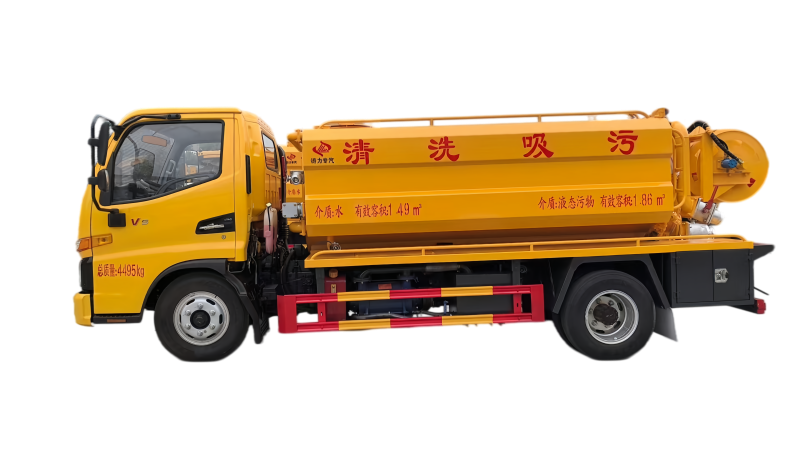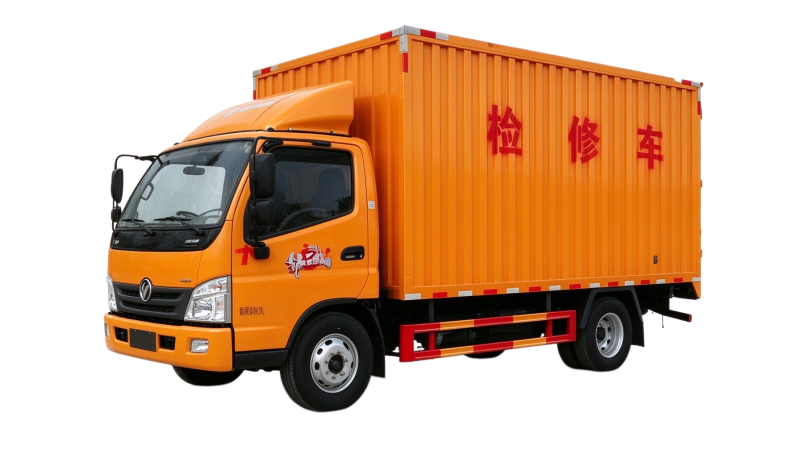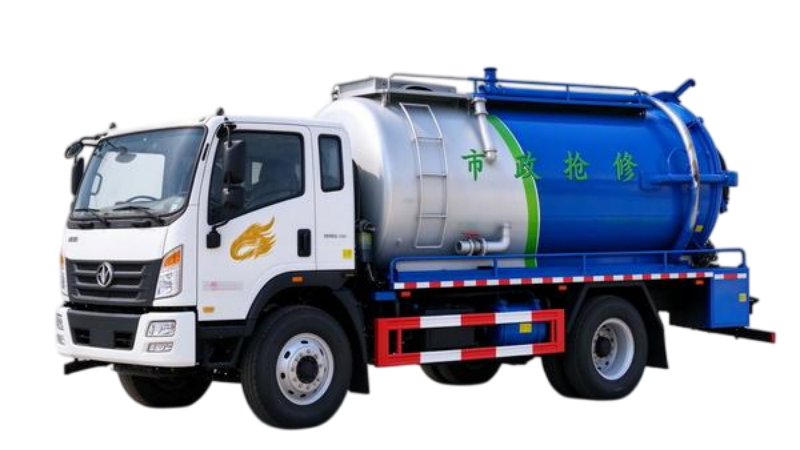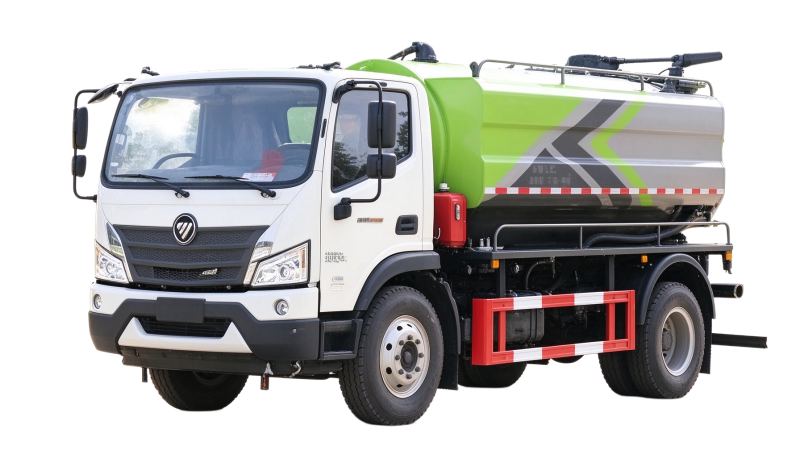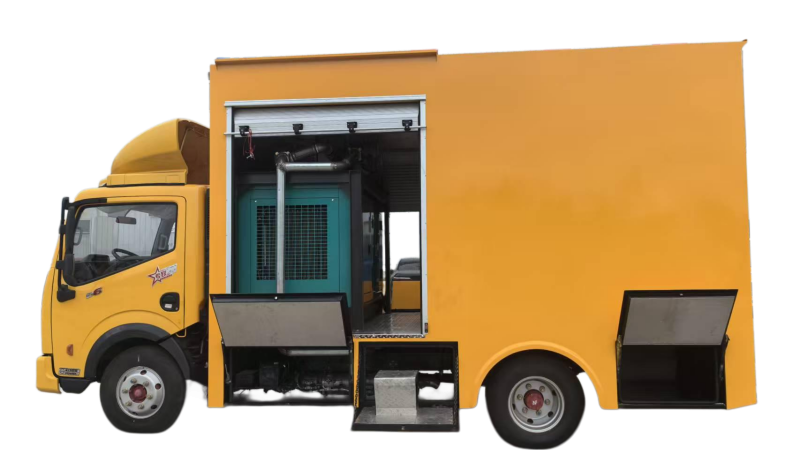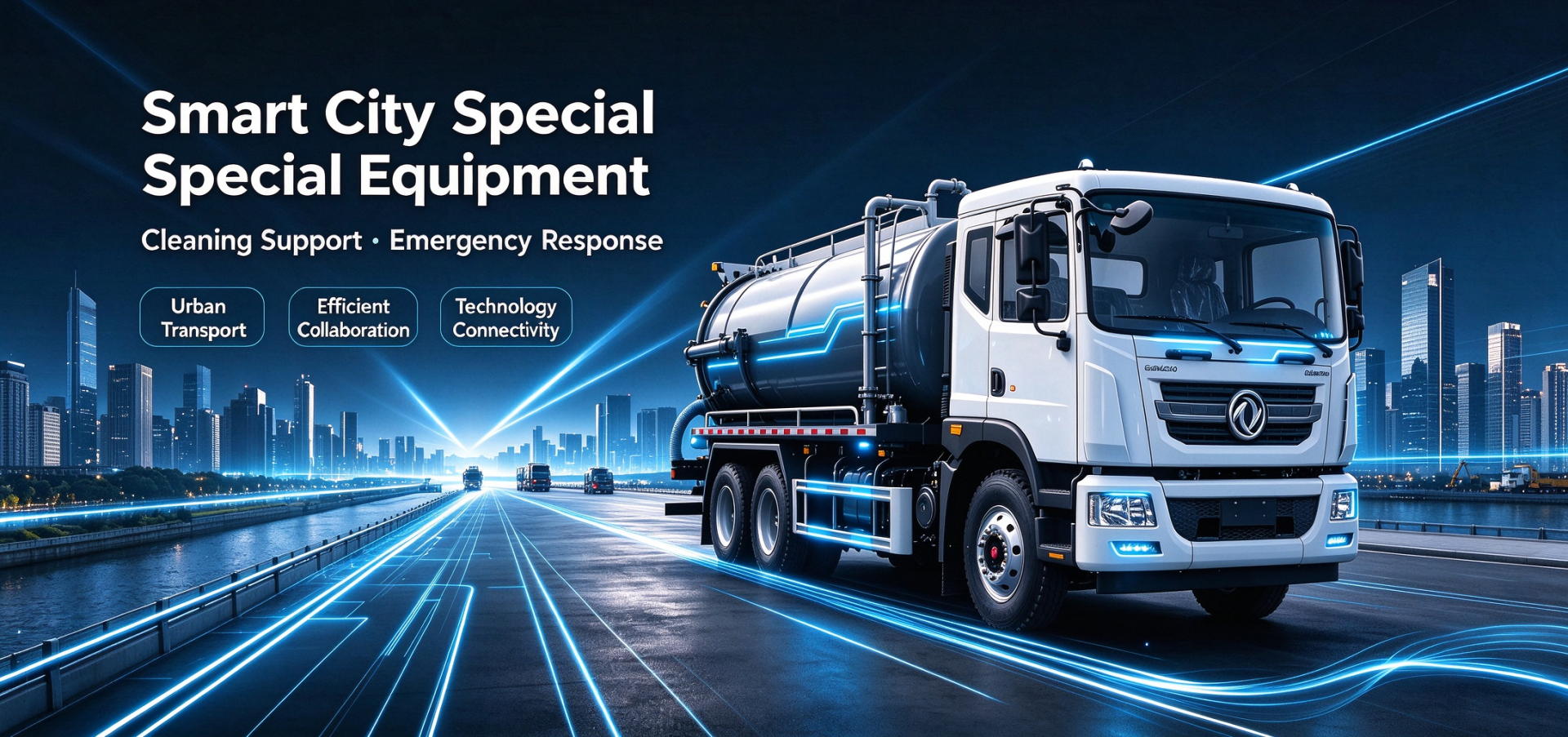
Hubei Zhuli Special Vehicle Co., Ltd. (Unified Social Credit Code: 91421302MADRB6LC3B) was founded on July 11, 2024, with a registered capital of RMB 40 million. The legal representative is Qin Chen. The registered address is No.511 Jiaotong Avenue, Zengdu District, Suizhou City, Hubei Province. The competent registration authority is Zengdu District Administration for Market Regulation. The enterprise status is Active (In operation). The company is a limited liability company (invested and controlled by natural persons), categorized under the special-purpose vehicle manufacturing segment of the automotive manufacturing industry. The number of employees covered by social insurance in 2025 was 30.
The company was established at the early recovery stage of the special vehicle industry after a deep adjustment. Following years of downturn, the sanitation equipment market achieved a year-on-year growth of 11.5% in 2025, and the growth rate further reached 10.57% in H1 2026. With a registered capital of RMB 40 million, the company entered this sector and rolled out capacity deployment amid the industry recovery window, controlling risks from heavy-asset investment by leveraging industry cycle trends.
The company’s business scope covers permitted and general project categories. Permitted items include road motor vehicle production, special equipment manufacturing, urban domestic waste operational services, and international road cargo transportation. General items include manufacturing of auto parts and components, sales of new energy vehicle complete vehicles, manufacturing of environmental protection special equipment, manufacturing of special equipment, sales of fire-fighting equipment, sales of domestic waste treatment equipment, sales of new energy vehicle battery swap facilities, import and export of goods, spray coating processing, electroplating processing, power generation technology services, and housing leasing. Judging from its business scope, the company is not merely a vehicle assembly enterprise. It focuses on R&D and manufacturing of special vehicle superstructures, and extends its business to component supporting and after-market services.
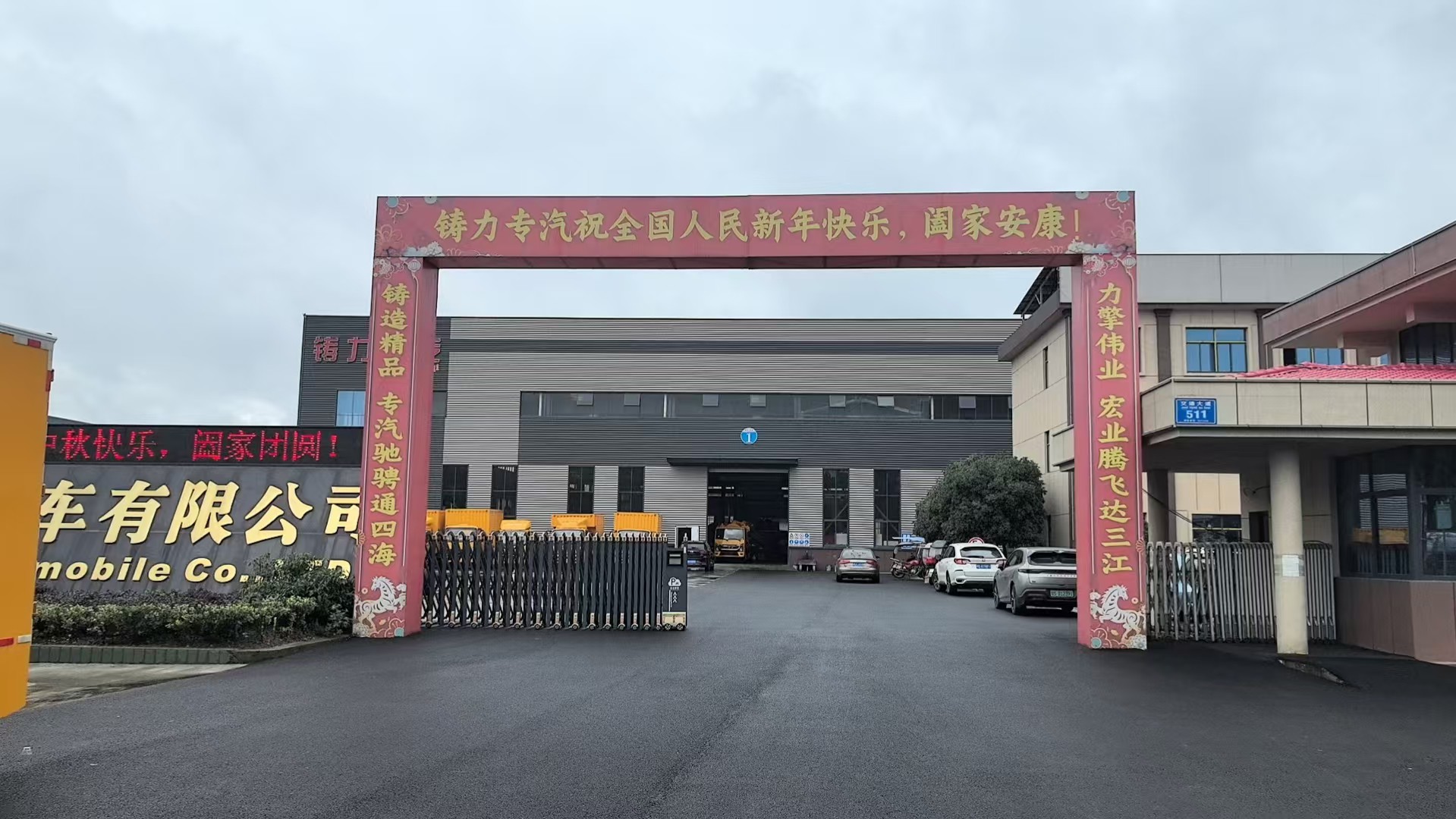
The company is located in the core industrial belt of Suizhou, known as the “Capital of Special-Purpose Vehicles in China”. Suizhou hosts China’s most complete and highly concentrated special vehicle industrial cluster. One out of every 10 special vehicles nationwide is made in Suizhou, and its product categories of emergency mobile equipment account for 65% of China’s total. This industrial cluster brings three core advantages to the company:
Supply Chain SynergySuizhou hosts dealer networks of mainstream chassis brands including Dongfeng, Sinotruk and Shaanxi Automobile, together with hundreds of special vehicle component suppliers. Production equipment purchased by the company such as plate shears, bending machines, cutting machines and coating facilities can be procured and maintained rapidly via the mature local supply chain, shortening equipment commissioning cycles and lowering operating costs.
Technical Talent ReserveDecades of development of Suizhou’s special vehicle industry has cultivated a rich talent pool of skilled workers and engineers. Manpower requirements for the planned production capacity can be met using local human resources, reducing heavy investment in cross-regional recruitment and training.
Policy & Testing SupportSuizhou is home to the National Special Vehicle Inspection Center and the public service platform of the Emergency Industry Demonstration Base. New product type approval application, type test and environmental consistency verification can all be completed locally, shortening time-to-market for new products.
Two independent filed projects are implemented on the same plot: Hubei Zhuli Project for Annual Production of 100 Emergency Rescue Special Vehicles and Hubei Zhuli Project for Annual Production of 300 High-pressure Washing & Suction Vehicles, located at No.511 Jiaotong Avenue, Zengdu District, Suizhou City (Zengdu Economic Development Zone). The combined planned annual capacity of the two projects totals 400 units. The approved land area of the site is 49,585.43 square meters (approx. 74.4 mu). Two new production workshops together with a comprehensive office building are constructed, with a total construction area of 23,587.2 square meters.
Core Process Equipment DeploymentThe company has purchased key special vehicle manufacturing equipment including plate shears, bending machines, cutting machines, overhead travelling cranes, coating equipment and R&D & testing instruments. The equipment set covers core working procedures for special vehicle superstructure manufacturing: plate shearing and bending for tank and structural part forming, cutting for plate blanking, overhead cranes for hoisting heavy components, and coating facilities for anti-corrosion treatment and surface finishing of components. Equipment selection follows practicality and cost-effectiveness, matching the planned capacity and avoiding depreciation pressure caused by over-investment.
Capacity Planning & Product PositioningThe production capacity represents a medium-small scale specialized capacity within Suizhou’s special vehicle cluster. The positioning is clear: the company will not compete head-on with large-volume mass production capacity of market leaders such as Chengli and E-PURE Environment. Instead, it focuses on in-depth development and customized manufacturing of segmented products such as high-pressure washing & suction vehicles. In May 2026, the project passed construction planning verification, and production facilities entered the trial production phase.
Qualification & Compliance SystemThe company has obtained road motor vehicle production permission and special equipment manufacturing qualification, holding 3 administrative licenses in total. Shareholders have completed capital contribution of RMB 12.31 million. Public bidding information shows that 3 bidding records were added between March and April 2026, including project bidding and shortlisting records. The company participates in market bidding competition as a fully qualified market entity.
The core of the company’s technology strategy: adopt component-level innovation in the R&D and manufacturing of special vehicle superstructures and build differentiated advantages at segmented technical nodes.
Patent Application: Quick-opening High-pressure Pump Water Inlet DeviceThis is the company’s most representative technical achievement. Publication No.: CN122589125A, filing date: June 2026. It is an invention patent application for high-pressure washing & suction vehicles, currently under substantive examination and not yet granted. Technical principle: Conventional high-pressure washing & suction vehicles adopt flexible hoses to connect high-pressure water pumps and tanks. When the tank is tilted for unloading, manual hose connection/disconnection or hose deformation is required to switch on/off fluid flow. Long-term operation leads to repeated tension and wear of hoses and joints, resulting in medium leakage, frequent maintenance and high operation cost. Zhuli’s technical solution adopts a sealing assembly consisting of an upper frustum ring and a lower frustum groove. The upper frustum ring is fixed at the lower end of the water outlet pipe on the side of the tank, while the lower frustum groove is mounted on the upper end of the water inlet pipe. The water inlet pipe is L-shaped and connected to the inlet of the high-pressure water pump. When the tank tilts for unloading, the frustum ring and groove automatically engage or disengage to realize automatic pipeline on-off, eliminating leakage risks caused by hose fatigue and reducing equipment maintenance pressure.
This technical route avoids disruptive innovation at the complete vehicle level and delivers structured engineering solutions targeting practical pain points in field operation. In the special vehicle industry, such refined R&D on functional components is an effective way for SMEs to build product reputation in niche segments. End-users of washing & suction vehicles largely evaluate products based on pipeline reliability and ease of maintenance.
Patent Layout StrategyUp to now, 3 invention patent applications of the company have been published on the CNIPA platform. As an enterprise established for about two years, its patent portfolio is still in the initial stage with clear orientation: targeted R&D on key functional components of core product — high-pressure washing & suction vehicles. Continuous iteration on pipeline systems, tank sealing and pumping efficiency will help gradually build technical barriers in this niche segment.
The company’s two core segments — sanitation equipment and emergency rescue equipment — are witnessing policy-driven structural growth.
Sanitation Equipment: Accelerated Electrification ReplacementIn H1 2026, China’s sanitation vehicle sales reached 43,053 units, up 10.57% year-on-year. After continuous decline during 2020–2024, the industry recovered. Structural highlights: new energy sanitation vehicle sales hit 12,299 units, rising 99.01% YoY with penetration rate reaching 28.57%. In July 2026, the monthly penetration rate of new energy sanitation vehicles further climbed to 34%.
Three major drivers:
Ongoing local government debt relief eases fiscal pressure and gradually releases procurement funds for sanitation equipment;
Falling lithium battery costs improve the economic performance of new energy sanitation vehicles in long-hour operation scenarios;
Two batches of national pilot cities for full electrification of public-sector vehicles enter intensive implementation. The electrification penetration of pilot cities reached 42.1% in Jan–Apr 2026, including Zhengzhou (76.5%), Tangshan (64.4%) and Chengdu (58.9%).
In terms of competition landscape, the CR10 of new energy sanitation equipment stands at 68.6%, higher than that of traditional sanitation vehicles, yet market shares of leading players remain volatile. Among top 10 new energy sanitation vehicle manufacturers by sales volume in Jan–Jul 2026, Chengli achieved YoY growth over 300%, and Shimei saw a surge of 3488%. Second-tier enterprises achieve rapid breakthroughs riding the electrification wave. This brings insight for new entrants like Zhuli: in the electrification transition window, brand moat of traditional fuel sanitation vehicles has not been fully transferred to the new energy track. SMEs with refined product development in specific niches have market entry opportunities.
Emergency Rescue Equipment: Intensive Policy ReleaseIn 2026, MIIT and Ministry of Emergency Management jointly issued the 15th Five-Year Plan for the Development of Safety & Emergency Equipment Industry. It targets a total industrial scale of RMB 1.4 trillion in key sectors by 2030, with 10 competitive industrial clusters and 70 characteristic industrial parks. China’s total safety & emergency industry scale has grown from RMB 1.5 trillion in 2020 to RMB 2.6 trillion, and the emergency equipment market exceeds RMB 1.1 trillion.
Suizhou is one of the national-level emergency industry demonstration bases. Hubei Province supports Suizhou to build a national transformation base for special vehicles and emergency industries, implementing the “1456” transformation strategy oriented toward new energy, intelligence, high-end manufacturing and integration, targeting an industrial output value over RMB 100 billion by 2030. The company’s emergency rescue special vehicle product line will directly benefit from regional industrial policy support.
The Plan shifts focus from mere equipment supply to scenario-driven development. It requires verification of equipment reliability under real disaster scenarios, covering 12 application areas including industrial manufacturing, urban flooding, urban-rural fire fighting and transportation. Procurement criteria for emergency equipment will evolve from simple parameter compliance toward practical field adaptability. For specialized SMEs, this represents both challenges requiring investment in scenario validation and opportunities for differentiated products to demonstrate value through field tests.
Based on production capacity, technology reserve and industry environment, core features of the company’s strategy are summarized below:
Niche-focused “Narrow & Deep” StrategySupported by the planned annual capacity of 400 units, the company prioritizes R&D of high-pressure washing & suction vehicles instead of full-spectrum product coverage. This model differs from the broad product portfolio of leading Suizhou manufacturers with hundreds of models and annual output of tens of thousands of units, and better fits the limited resources of a newly founded enterprise. The sub-sector of electric sewage treatment vehicles, to which washing & suction vehicles belong, sees robust growth with YoY sales growth of 356% in Jan–Jul 2026 for electric models.
Differentiation Driven by Functional Component InnovationThe R&D logic embodied by the quick-opening high-pressure pump water inlet device converts end-user operational pain points into structured engineering solutions. Iterating this R&D methodology on tank sealing, suction efficiency and operation convenience will help build product recognition of “reliable and easy-to-maintain” in the niche market and create brand advantages beyond low-price competition.
Asset-light Operation Leveraging Industrial ClusterThe company renovates existing land for construction, investing mainly in core process equipment. Non-core components are sourced from local suppliers in Suizhou. This model lowers initial investment and fixed cost pressure and maintains financial flexibility during capacity ramp-up.
Forward Layout of Compliance QualificationsRoad motor vehicle production permission and special equipment manufacturing qualification grant the company legal eligibility to participate in government procurement and bidding. Existing bidding participation records mark the company’s access to the bidding market.
From a macro perspective, Zhuli Special Vehicle’s strategic logic is as follows: rooted in Suizhou’s hundred-billion special vehicle industrial cluster ecosystem, taking high-pressure washing & suction vehicles as the core niche entry point, building differentiation via functional component technological innovation, seizing the market window of rising penetration of new energy sanitation equipment, and striving to become a “small, specialized, sophisticated” manufacturer of special vehicle superstructures. The success of this strategy hinges on three key factors: continuous output of technological innovation, speed of market penetration in niche segments, and steady growth of capacity utilization rate.

 Chinese
 English